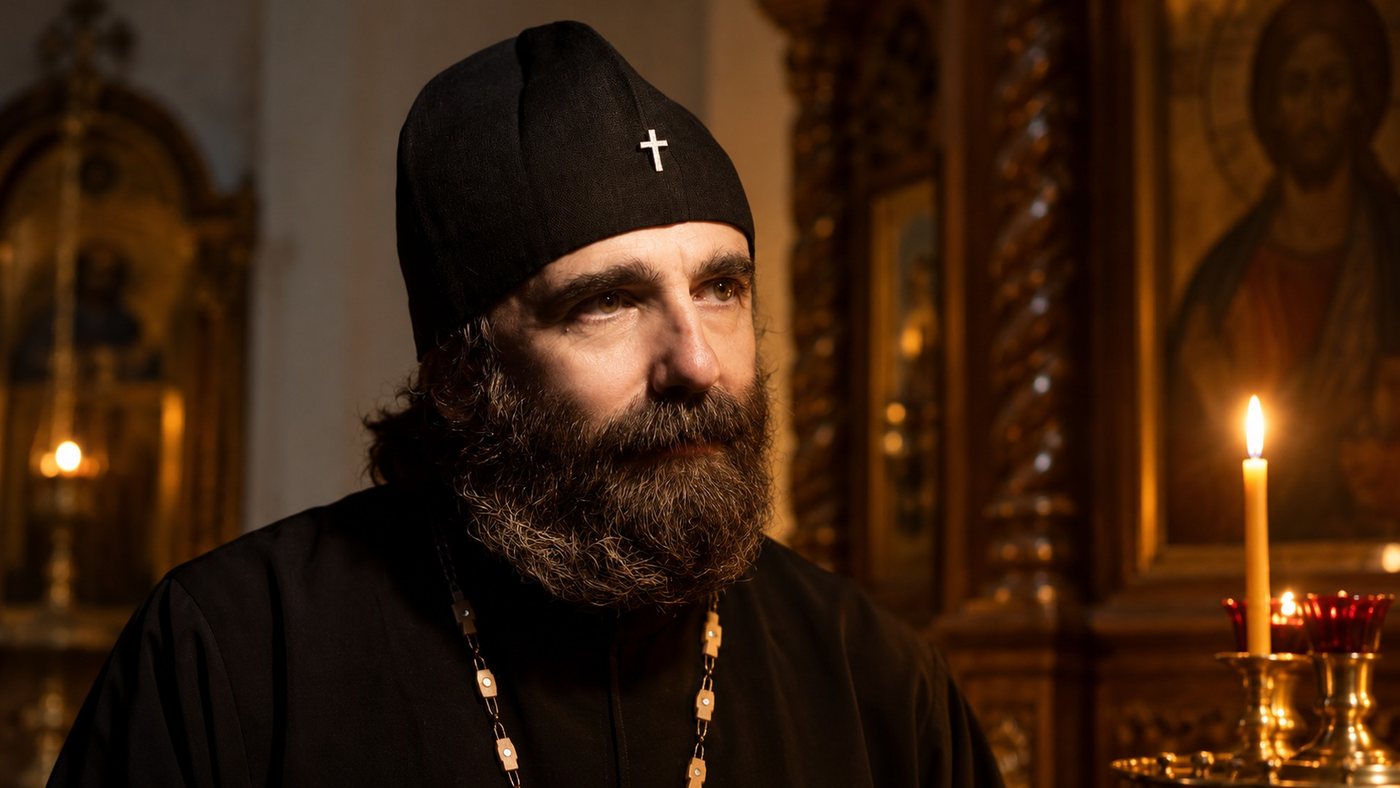
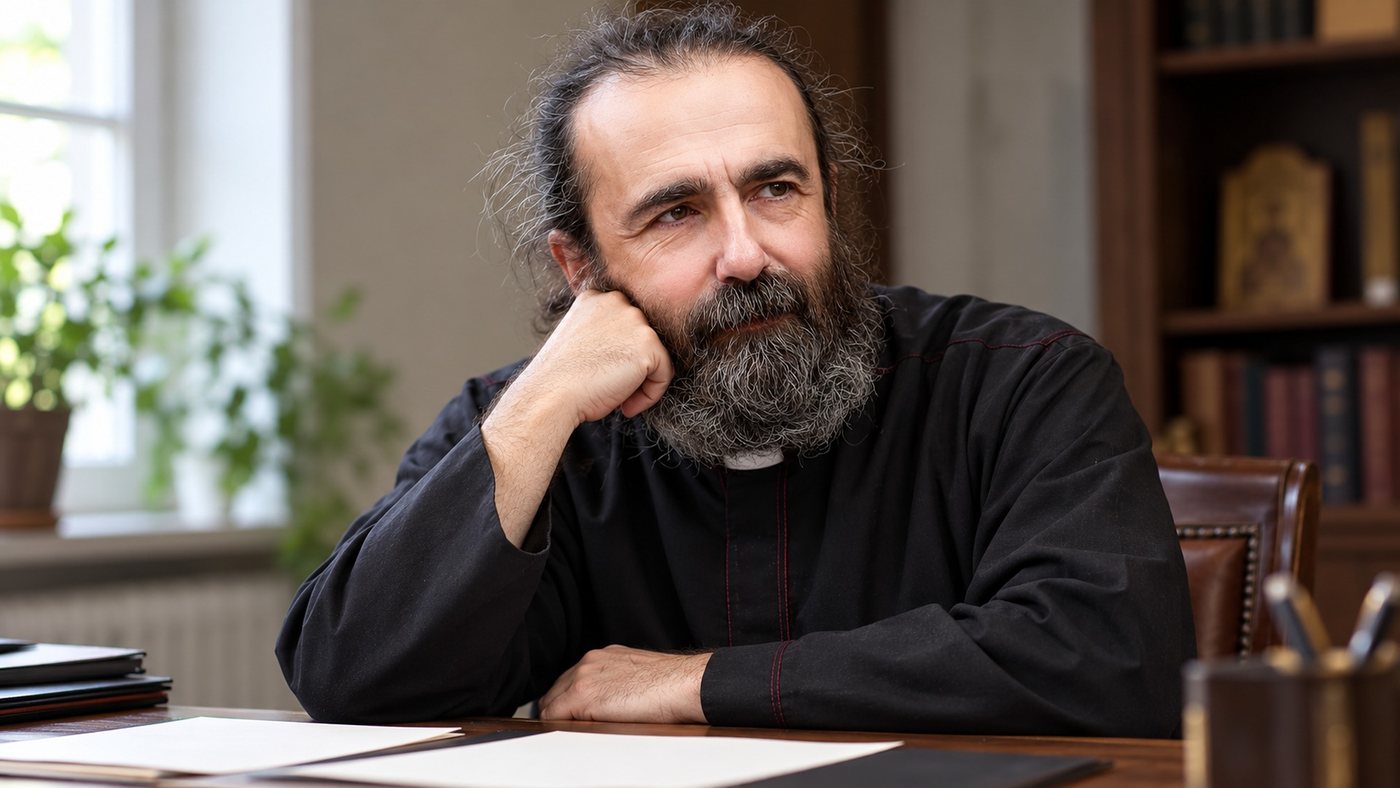
Archbishop Grigory (Grigory Alexandrovich Mikhnov-Vaitenko) is an Orthodox clergyman, a churchman and public figure, a human-rights advocate and the author of books on the Christian faith for a general readership. Since 29 April 2023 he has been Primate of the Apostolic Orthodox Church (AOC).
Throughout his ministry Vladyka Grigory has consistently upheld the principles of conciliarity, freedom of conscience, the Church’s independence from political power and the Christian’s responsibility towards his neighbour. Pastoral care, Christian education and help for prisoners, internally displaced people and those who find themselves in hardship occupy a central place in his work.
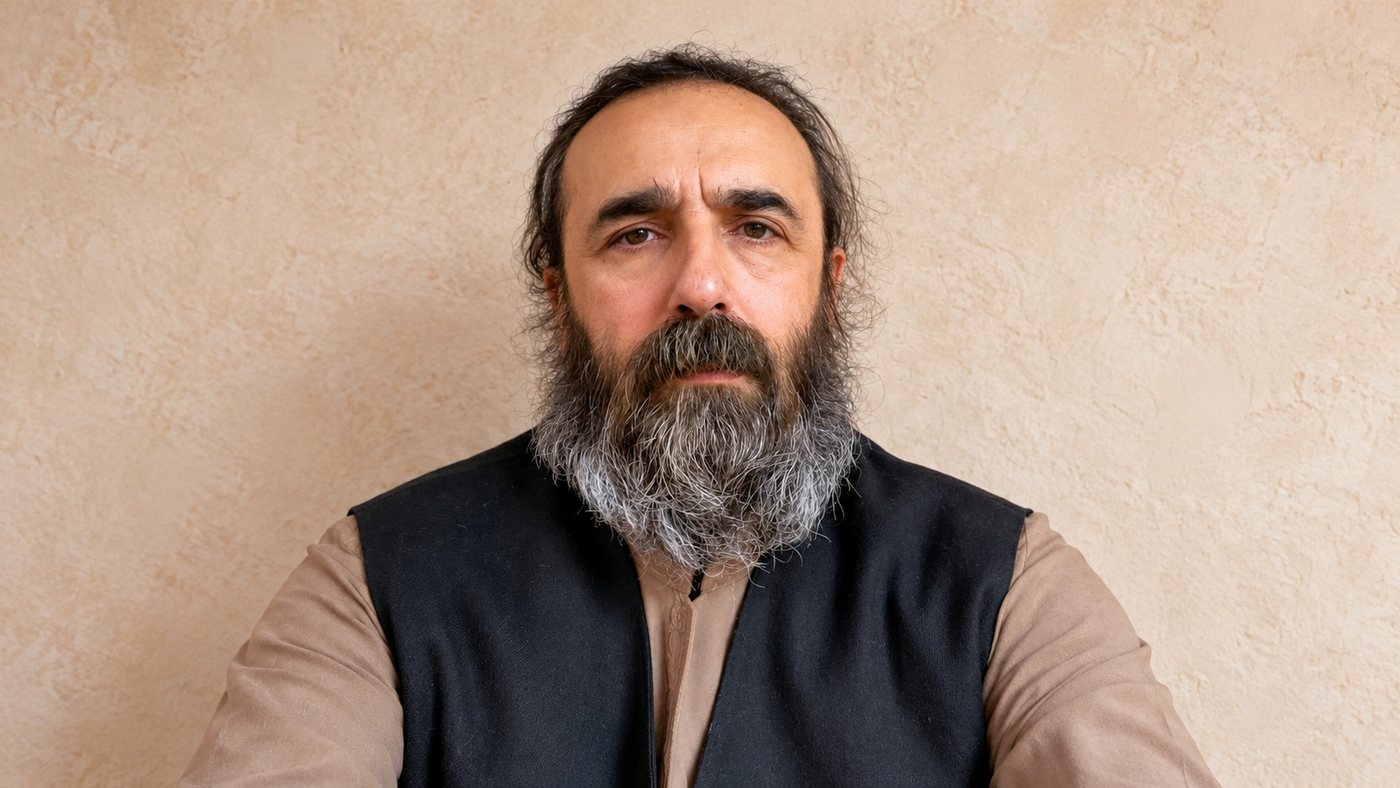
Early years and education
Grigory Alexandrovich Mikhnov-Vaitenko was born in Moscow on 3 September 1967.
His mother, Sofya Grigoryevna Mikhnova-Voitenko (née Filkinshtein), was a costume designer. His father was the celebrated poet, playwright, singer-songwriter and dissident Alexander Arkadyevich Galich.
In 1972, when Grigory was four, his mother died. From then on he was brought up by his grandmother, Polina Markovna. The childhood and youth of the future clergyman fell in the last decades of the Soviet era.
In 1984 Grigory entered the screenwriting faculty of VGIK, the All-Union State Institute of Cinematography. He later left without completing the full course and did his military service, part of it in Ukraine.
A defining moment in his spiritual life was his encounter with the Orthodox community of Archpriest Alexander Men, one of the best-known Christian preachers of the late Soviet period.
In 1985 Grigory received Holy Baptism. The spiritual legacy of Fr Alexander, his openness to dialogue, his attention to the human person and his desire to speak of Christianity in a language modern society could understand did much to shape the churchmanship of the future archbishop.
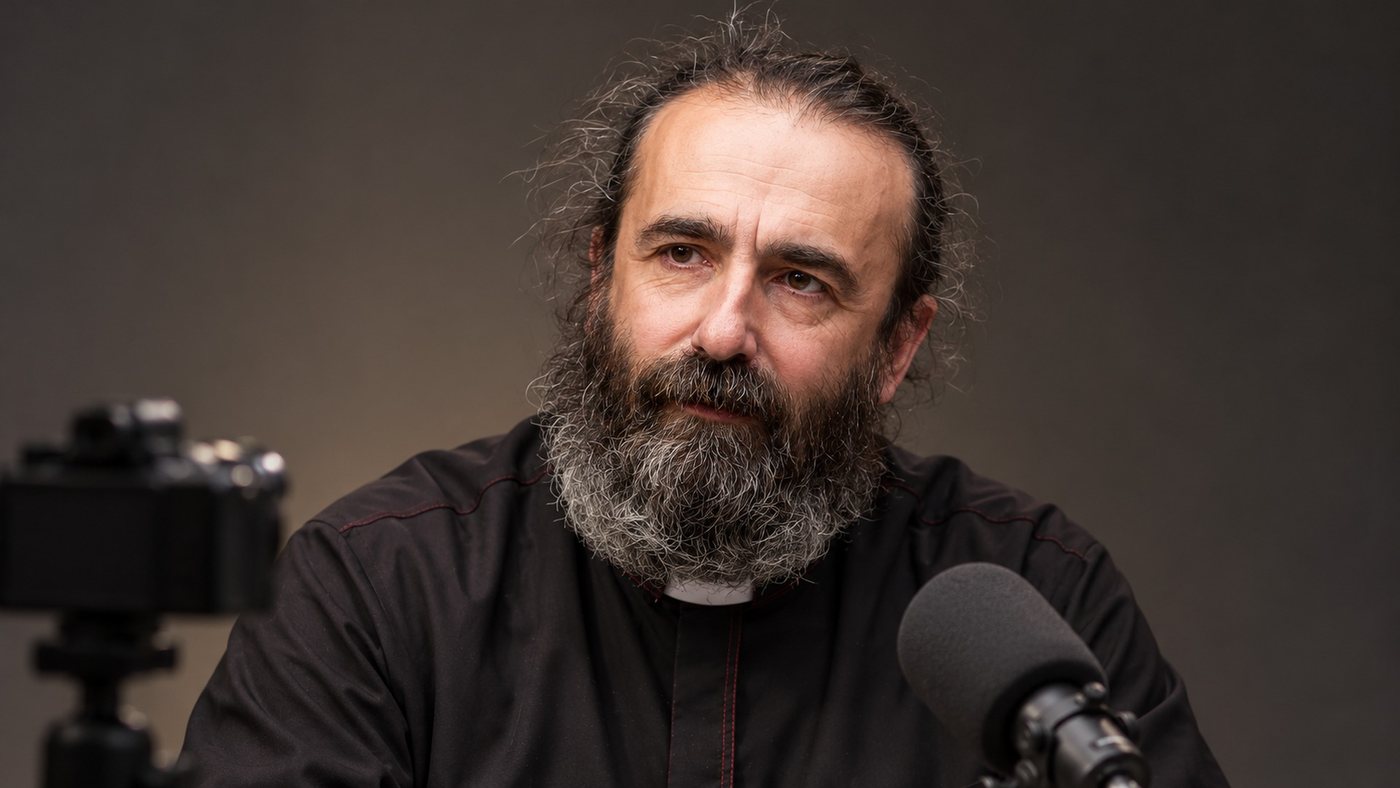
Television and Christian education
Before his ordination, Grigory Mikhnov-Vaitenko devoted much of his professional life to television, film production and the growth of independent media.
From the late 1980s he worked in television, making programmes, organising broadcasting and managing media projects. Over the years he helped to develop specialist television channels devoted to culture, cinema, children’s education and learning.
From 2003 to 2008 he was general director of the Orthodox Blagovest TV channel.
His work in Orthodox broadcasting became an important stage in his growth within the Church. It allowed him to bring together professional experience in mass communication and an interest in theology, Christian culture and the mission of the Church.
Grigory Mikhnov-Vaitenko went on to write a number of popular Orthodox books on Christian morality, the spiritual life, church traditions and the everyday practice of the believer.
Among his works are “Love Your Neighbour, or The Hardest Commandment”, “Is It a Sin?… or Church Superstitions Once Again”, “Our Heavenly Guardians and Patrons”, “The Orthodox Attitude to Old Age” and “Should a Christian Fear the Future?”.
His work as an educator aims above all to make the foundations of the Christian faith accessible to a wide audience and to help people tell genuine church tradition apart from cultural custom and superstition.
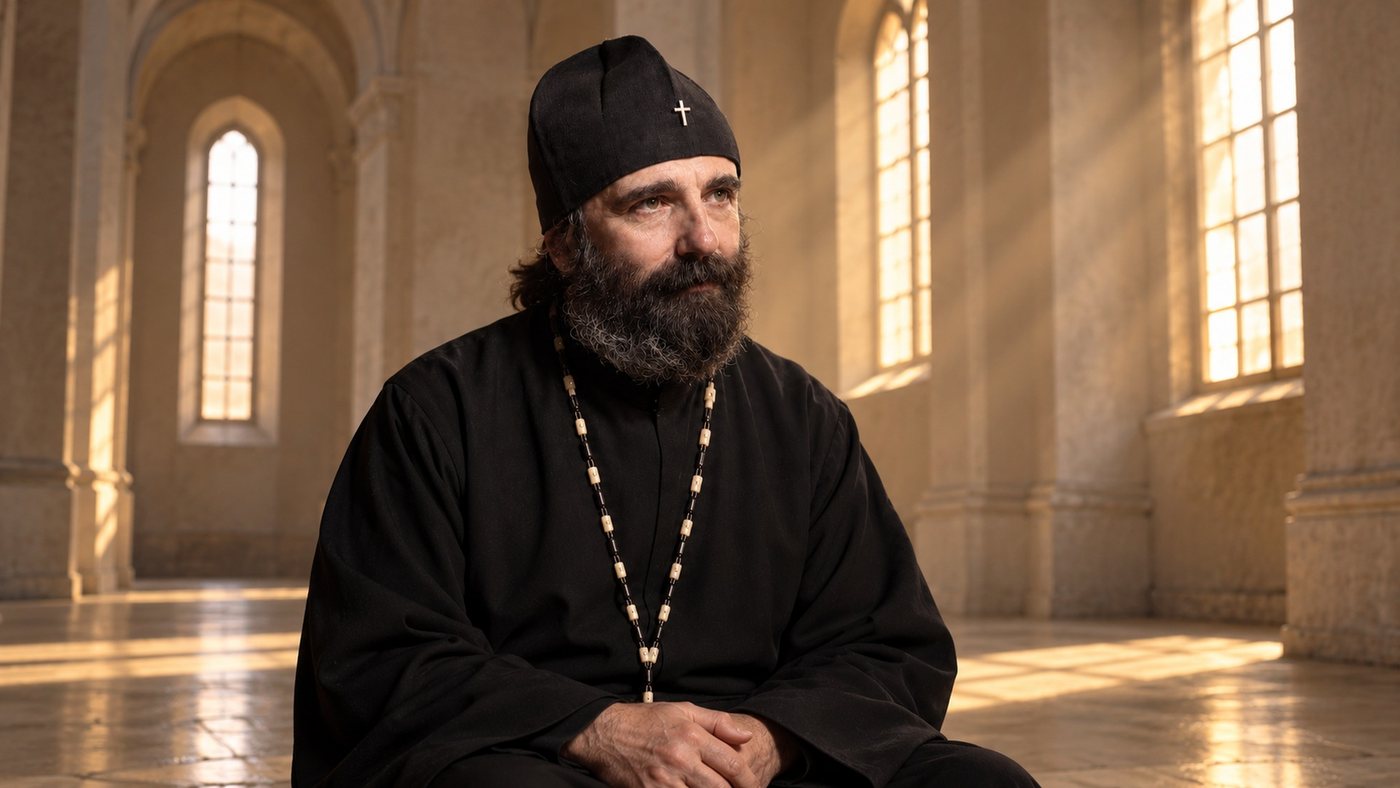
The beginning of his priestly ministry
In 2008 Grigory Mikhnov-Vaitenko was ordained deacon by Archbishop Lev (Tserpitsky) of Novgorod and Staraya Russa, within the jurisdiction of the Russian Orthodox Church.
On 13 February 2009 the same bishop ordained him to the priesthood.
He was assigned to the Church of the Holy Great Martyr George the Victorious in the town of Staraya Russa, in the Novgorod region.
During his years in the parish Fr Grigory gave spiritual guidance to the faithful, celebrated the services and sacraments of the Church, catechised adults, led talks on the faith and taught the foundations of Orthodox culture.
He paid particular attention to people in difficult social circumstances, among them the homeless and those in need of rehabilitation.
Already at that time his pastoral work rested on a conviction that Christian faith must not be confined to worship and the preached word, but is called to express itself in direct help to people.

The road to the Apostolic Orthodox Church
The events of 2014 and the outbreak of armed conflict between Russia and Ukraine became a turning point in Fr Grigory’s life in the Church.
After a journey to Kramatorsk, where he saw the consequences of the fighting at first hand, he spoke out publicly against Christians taking part in a fratricidal war.
On 31 August 2014, in a sermon, he announced a lengthy exclusion from Holy Communion for those who had voluntarily taken part in the armed conflict and for those who had incited its continuation.
His stand drew a wide response in society and in the Church.
Fr Grigory repeatedly stressed that the Church must be a peacemaker, able to help reconcile opposing sides and to protect human life regardless of a person’s nationality or political allegiance.
In December 2014 he asked to be released from active ministry in the Novgorod Diocese of the Russian Orthodox Church. His request was granted.
In 2015 Grigory Mikhnov-Vaitenko joined the Apostolic Orthodox Church, a church body that came into being in 2000 with the participation of Protopresbyter Gleb Yakunin, Metropolitan Stefan (Linitsky), Metropolitan Kiriak (Temercidi) and Metropolitan Vitaly (Kuzhevatov).
The AOC proclaimed as the foundations of its life fidelity to Orthodox doctrine, conciliar church governance, the self-reliance of its communities, Christian brotherly love and the Church’s freedom from dictation by the state.
On 10 June 2015 Grigory Mikhnov-Vaitenko was appointed Exarch of the AOC for the Baltic region.
In July 2015 he was consecrated Bishop of the Varangians and the Baltic. The consecration was performed by the Primate of the Apostolic Orthodox Church, Metropolitan Vitaly (Kuzhevatov), and Bishop Simeon (Yuzhakov) of Krutitsy and Kolomna.
Vladyka Grigory was later raised to the rank of archbishop, continuing his ministry in St Petersburg and his work of building up the communities of the Apostolic Orthodox Church.

Human rights and social ministry
The defence of human dignity, freedom of conscience and the rights of vulnerable people holds a significant place in Archbishop Grigory’s life.
While still a parish priest he began helping people who had been detained, prisoners and their families. In time this work became systematic.
Vladyka Grigory became a member of the St Petersburg Human Rights Council and took part in civic initiatives for human rights, freedom of religion and help for prisoners.
In 2020 he was among the founders of the Yakunin Committee “Freedom of Conscience”, named in memory of Protopresbyter Gleb Yakunin.
The largest part of his work came to be help for people affected by the war in Ukraine.
After the full-scale hostilities began in February 2022, Archbishop Grigory and those who shared his convictions set up a system of humanitarian aid in St Petersburg for Ukrainian refugees and displaced people.
With the participation of the Holy Trinity community of the Orthodox Apostolic tradition, a Refugee Assistance Centre was established.
Its work included temporary housing, medical and legal aid, help with paperwork, restoring contact between family members and moving people to places of safety.
Over the years of its work, the Centre has helped thousands of people in desperate circumstances.
In 2022 Grigory Mikhnov-Vaitenko received the Moscow Helsinki Group award in the category “For services to the protection of the rights of prisoners and other vulnerable groups”.
This public recognition bore witness to the importance of the social and humanitarian mission, which Vladyka Grigory regards as an inseparable part of Christian ministry.

Election as Primate of the Apostolic Orthodox Church
On 29 April 2023 an extraordinary session of the Council of the Apostolic Orthodox Church was held.
Following the request of the serving Primate, Metropolitan Vitaly (Kuzhevatov), to retire, the Council was asked to elect a new head of church governance.
In an open vote Archbishop Grigory Mikhnov-Vaitenko was unanimously elected Primate of the Apostolic Orthodox Church.
His election continued the tradition laid down when the AOC was founded: the pursuit of a richer conciliar life, the strengthening of self-governing Orthodox communities and the carrying out of the Christian mission through service to people.
As Primate, Archbishop Grigory exercises the general spiritual leadership of the Church and takes part in the work of its Councils and Synod, in coordinating church life and in developing its communities and church education.
At the same time he continues his pastoral ministry in St Petersburg as rector of the Holy Trinity community of the Orthodox Apostolic tradition.
Convictions and principles of ministry
At the heart of Archbishop Grigory’s theological and social convictions lies an understanding of the Church as a living community of people united by faith in Christ, and not merely as an organisational structure.
In his sermons, interviews and public addresses he returns again and again to personal Christian responsibility, freedom of conscience, brotherly love, mercy and reconciliation.
Vladyka Grigory attaches particular importance to the conciliar character of church governance and to the communities’ share in deciding questions of their own spiritual life.
He argues for a thoughtful development of church practice, for theological knowledge that is open to all, for overcoming superstition and for restoring the direct link between the teaching of the Gospel and the everyday life of believers.
One of the key principles of his stance is that the Church must preserve its moral independence in its relations with state and political power.
Archbishop Grigory is convinced that Christian ministry means not only proclaiming moral ideals but taking an active part in the lives of those who need protection, comfort and help.

His ministry today
In February 2024 Archbishop Grigory was detained in St Petersburg after announcing that he intended to hold a memorial prayer service for Alexei Navalny. Following his detention he was taken to hospital with impaired cerebral circulation.
In July 2024 the Ministry of Justice of the Russian Federation added Grigory Mikhnov-Vaitenko to its register of “foreign agents”. The archbishop publicly stated his disagreement with the decision.
Despite these circumstances and the administrative pressure, Vladyka Grigory has carried on his church, pastoral and public ministry.
As Primate of the Apostolic Orthodox Church he devotes his attention to preserving and developing church communities, training clergy, defending freedom of religion, Christian education and humanitarian work.
His path in the Church brings together the experience of spiritual guidance, educational work, public service and direct help to those in need.
At the root of this ministry remains the desire to embody the Gospel principles of love of neighbour, mercy and human dignity in the life of the Church and of society today.